Matcha Melt: A Playful Font for Creative Branding
Every designer knows the moment: you’re staring at a blank canvas, searching for a typeface that doesn’t just sit there but sings. It needs personality, a dash of whimsy, and enough versatility to carry a project from concept to final proof. If your work leans toward the cheerful, artistic, or handcrafted, the font you choose isn’t just a utility—it’s a core part of the story you’re telling. That’s where a display font like Matcha Melt enters the conversation, offering a distinct voice for projects that demand a creative, approachable feel.
More Than Just a Pretty Face
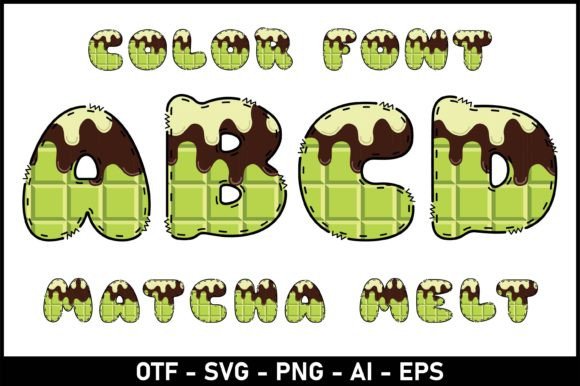
At its heart, Matcha Melt is a display font, designed to capture attention in headlines, logos, and short bursts of text. Its visual appeal lies in its soft, rounded edges and a slightly irregular baseline that mimics the warmth of hand-lettering without sacrificing legibility. This isn’t a rigid, geometric sans serif; it’s a typeface with a gentle, organic rhythm. Think of the inviting text on a boutique’s packaging, the playful title of a blog post, or the cheerful branding on a café menu. The font’s character set often includes stylistic alternates and swashes, allowing you to customize letterforms for a more unique, handcrafted look. This flexibility is a key asset for any brand identity project aiming for a personal touch.
For those working in digital spaces, the font’s compatibility is a practical consideration worth noting. The standard black version works seamlessly with popular design platforms like Cricut Design Space, making it a viable option for crafters and small business owners creating physical goods. However, if you’re looking to use its color variants—often featuring gradients or multi-tone effects—you’ll need to work within specific design software such as Adobe Photoshop, Illustrator, or Silhouette Studio. This distinction is crucial for planning your workflow, especially if your final output involves vinyl cutting or print-on-demand services. Always review the included font files and licensing to ensure they align with your project’s needs, whether for personal use or commercial licensing.
Where Whimsy Meets Strategy: Practical Applications
The true test of any creative asset is its real-world application. A font like Matcha Melt shines in scenarios where you want to evoke creativity, warmth, and a touch of playfulness. It’s particularly effective for logo design aimed at family-oriented brands, children’s products, artisanal goods, or lifestyle blogs. Imagine a logo for a handmade soap company or a whimsical children’s book title—this typeface sets the tone immediately. In packaging design, it can transform a simple label into an inviting, shelf-ready piece that communicates quality and care.
Beyond logos and packaging, consider its role in social media graphics. In a crowded feed, a distinctive, friendly font can stop the scroll. Use it for Instagram story highlights, quote graphics, or promotional banners where you want to convey a relaxed, authentic vibe. For web design, it can serve as a standout hero font for headings on a homepage or a blog, paired with a clean, readable sans serif font for body copy to ensure a smooth reading experience. The same principle applies to editorial design—think of a magazine feature or a zine where the typography itself contributes to the visual narrative.
Building Cohesion and Connection
One of the most significant advantages of choosing a distinctive font like Matcha Melt is its power to foster visual consistency. When used strategically across your marketing assets—from your website to your email newsletters to your printed flyers—it creates a recognizable thread that ties your brand together. This consistency is foundational for building brand recognition. Your audience begins to associate the font’s specific personality with your business’s values and aesthetic.
However, achieving this requires thoughtful font pairing. A display font rarely works alone. The key is to balance its personality with a more neutral, highly legible typeface. For instance, pairing Matcha Melt with a simple geometric sans serif for body text ensures your website or brochure remains easy to read while maintaining its artistic flair. For print materials like invitations or greeting cards, you might pair it with a classic serif font for a more elegant, formal contrast. Always test your pairings in context: create a mock-up of your business card, website header, or social post to see how the fonts interact in terms of size, spacing, and color.
Making It Work for Your Project
Before integrating any new font into your toolkit, a few practical steps can save time and ensure success. First, review the included font styles. Does the family include multiple weights (like light, regular, bold) or just a single style? Understanding this helps you plan for versatility in headlines and subheadings. Second, consider readability. While a playful font is engaging, it must remain clear at the sizes you intend to use it. Test it on various devices and in print to ensure key messages aren’t lost.
Finally, think about your long-term needs. If you’re using the font for client work or merchandise, commercial licensing is non-negotiable. Ensure the license covers your intended use, whether for digital products, printed goods, or merchandise. For creators looking to expand their design assets, a font like this can be a valuable addition to a library, offering a specific mood that other, more standard fonts cannot. It’s not about replacing every typeface you own, but having the right tool for the right creative job—one that helps your work communicate not just information, but feeling.